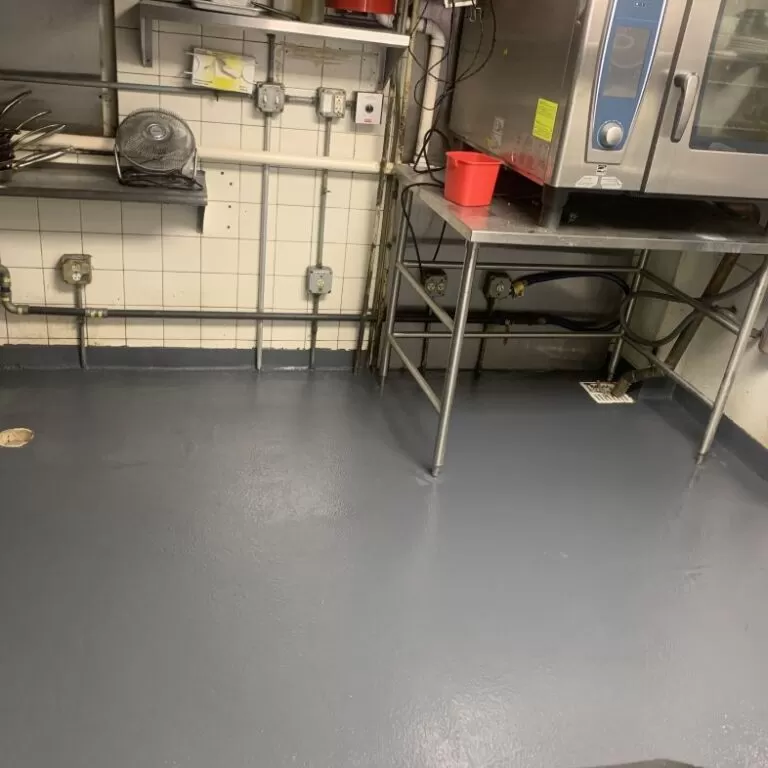
Running a restaurant in New Jersey means navigating some of the most demanding health and safety inspection standards in the food service industry. Your kitchen is inspected, evaluated, and scrutinized on a regular basis. Every surface in that kitchen, including the floor beneath it all, either helps you pass or creates problems you have to explain. For restaurant owners who take their operation seriously, understanding what makes a great commercial kitchen floor is genuinely important operational knowledge.
Why Restaurant Kitchens Are Especially Demanding on Flooring
A restaurant kitchen operates at a pace and intensity that most people outside the industry don’t fully appreciate. During a dinner service, the floor is being hit constantly with grease drips from the line, water splashes from the dish station, dropped ingredients, and the constant foot traffic of a team moving at full speed. The floor doesn’t get a break between service periods. It just keeps taking abuse and needs to perform safely and cleanly throughout.
That operating reality eliminates most standard flooring options immediately. The surface needs to handle thermal shock from hot liquids hitting it repeatedly. It needs to resist the chemical sanitizers applied between services and at close. It needs to stay slip resistant when it’s grease-coated and wet. And it needs to meet the health code standards that New Jersey inspection authorities apply to food service facilities. Finding a floor that checks every one of those boxes reliably is the core challenge that every restaurant owner faces.
What Do NJ Health Inspectors Look for in Kitchen Floors?
New Jersey health inspectors evaluate kitchen floors against specific standards that reflect both state and federal food safety guidelines. A compliant floor must be smooth, cleanable, and non-absorbent. It must not have cracks, breaks, or open seams where bacteria can accumulate below the surface. It must be slip resistant to meet workplace safety standards. And it must be able to withstand the chemical cleaners that health codes require for effective sanitation.
Old tile with damaged grout joints is one of the most common floor-related inspection findings in commercial kitchens. Even tile that looks visually intact often has subsurface moisture problems, cracked grout below the visible surface, and bacterial accumulation that a swab test reveals. For restaurant owners who want to eliminate floor-related inspection findings entirely, a seamless epoxy system is the most straightforward solution available.
How Long Does an Epoxy Floor Installation Disrupt Restaurant Operations?
This is the question most restaurant owners ask first, and it’s the right one to ask. Every day your kitchen is down for a flooring project is a day of lost revenue. HPS Flooring typically completes restaurant kitchen-sized installations in approximately three days. That timeline includes surface preparation, slurry and aggregate application, and the chemical resin topcoat. Each phase requires curing time before the next begins, and HPS Flooring manages that sequencing to keep the project on schedule.
Their team works flexible hours around each client’s production needs. Off-hours work, overnight phases, and weekend scheduling are all options they accommodate to minimize the impact on restaurant operations. For NJ restaurant operators researching commercial kitchen flooring NJ solutions that can be completed with minimal service disruption, this flexible scheduling approach is a practical advantage that makes the installation decision easier.
Is Epoxy Flooring Safe for a Restaurant Kitchen Environment?
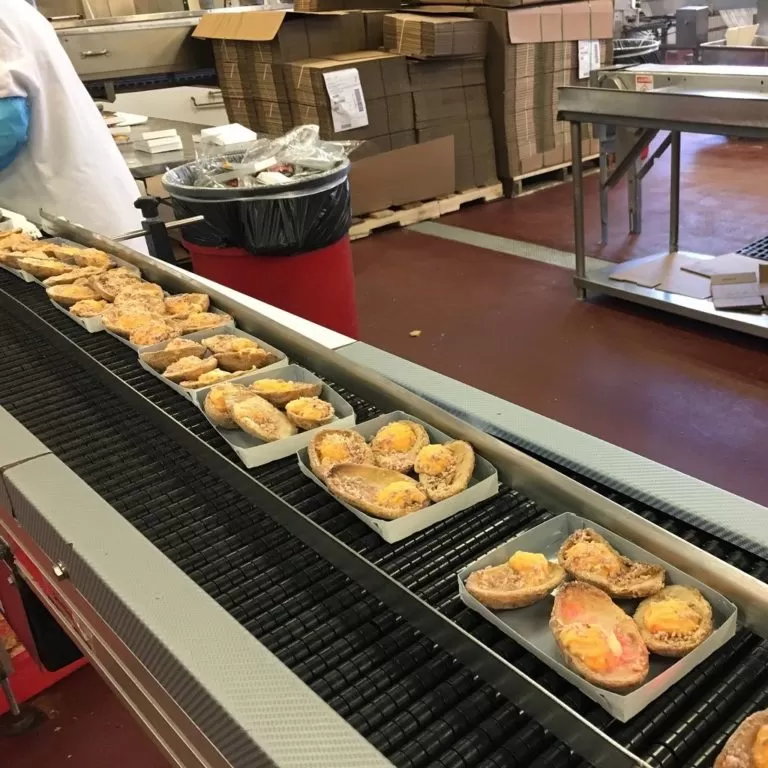
Safety in a restaurant kitchen floor means two specific things: slip resistance for the staff working on it, and hygiene for the food being prepared in the environment above it. HPS Flooring’s epoxy systems address both with a single installation. The broadcast aggregate embedded in the slurry layer creates built-in slip resistance that doesn’t wear away with cleaning or use. The seamless, non-porous cured surface provides a hygienic environment that resists bacterial accumulation and is easy to clean to health code standards.
The antimicrobial formulation used in HPS Flooring’s systems meets USDA and FDA requirements for food service environments. That compliance means restaurant operators can point to their floor system specifically when addressing health inspection requirements for non-porous, bacteria-resistant surfaces in food preparation areas.
What Experience Does HPS Flooring Have with Restaurant Kitchens?
HPS Flooring has been installing epoxy systems in commercial kitchens since 1988. That’s over 37 years of working specifically with food service facilities, building the knowledge base and installation expertise that professional restaurant kitchens require. They serve facilities exclusively in the commercial and industrial food service sector, which means their team doesn’t split its attention between residential projects and professional kitchen installations.
For restaurant owners in New Jersey, their service area covers locations including Montclair, Asbury Park, Morristown, Red Bank, and surrounding communities. Their commercial kitchen flooring installations extend into New York and Pennsylvania as well, giving them experience with the varying health code standards and inspection practices across the tri-state region.
What Should a Restaurant Owner Do First?
The most practical first step is taking advantage of HPS Flooring’s free, no-pressure consultation. Every restaurant kitchen has unique characteristics: the age of the existing floor, what’s currently installed, the layout, the traffic patterns, and the specific health code requirements that apply to that facility. A consultation gives HPS Flooring the information they need to recommend the right solution for that specific kitchen, and gives the restaurant owner a clear picture of what the project would involve before any commitment is made.
Conclusion
For restaurant owners in New Jersey, the kitchen floor is too important to leave to chance or choose based on upfront price alone. It affects staff safety, health inspection outcomes, daily maintenance costs, and the long-term operational reliability of your kitchen. Epoxy flooring installed by experienced commercial specialists provides the performance, compliance, and durability that restaurant kitchens in NJ genuinely need. HPS Flooring’s 37-year track record in this specific field makes them one of the most qualified choices for that installation.
FAQ
What flooring do NJ health inspectors prefer in commercial kitchens? Health inspectors require smooth, cleanable, non-absorbent surfaces with no open seams or cracks. Seamless epoxy flooring meets every one of these requirements, making it the preferred choice for compliant commercial kitchens.
How does HPS Flooring minimize downtime during a restaurant kitchen installation? HPS Flooring typically completes kitchen-sized installations in three days and offers flexible scheduling including off-hours and overnight work phases to minimize disruption to restaurant operations.
Does HPS Flooring serve restaurants throughout New Jersey? Yes. HPS Flooring serves commercial kitchen clients across NJ including Montclair, Asbury Park, Morristown, Red Bank, and surrounding areas, plus parts of New York and Pennsylvania.